The first time I watched a patient walk in for cosmetic botox and leave with a brighter, more open expression, I understood why this treatment inspires fierce loyalty. The second time I saw a patient from a discount med spa with a drooping eyelid and frozen smile, I understood why people hesitate. Choosing who injects your botox matters more than most people realize. The product is standardized. The expertise is not.
If you’re weighing a botox doctor, a dermatologist, or a med spa, the decision hinges on your goals, your anatomy, and the safety net you expect if something goes sideways. There isn’t a one size fits all answer, but there is a thoughtful way to decide.
What botox actually does
Botox is a brand name for botulinum toxin type A, a purified neurotoxin that temporarily relaxes muscles. In cosmetic botox, small doses target the facial muscles that etch expression lines into skin, smoothing forehead lines, frown lines between the brows, and crow’s feet. With precise placement, it can soften chin dimpling, elevate the brows slightly, reduce bunny lines along the nose, refine the jawline by slimming enlarged masseter muscles, and even turn the upper lip subtly upward in a lip flip.
Medical botox treats problems driven by overactive muscles or glands. That includes chronic migraine prevention, cervical dystonia, bruxism and TMJ pain related to masseter clenching, hyperhidrosis of the underarms, palms, or soles, and certain spasticity conditions. These uses follow different dosing schemes and require an understanding of neuromuscular pathways beyond facial aesthetics.
Results build over three to seven days and peak at about two weeks. Most people maintain results with repeat sessions every three to four months. Metabolism, muscle strength, dose, and technique shape the duration. Strong frontalis muscles or chronic animation can shorten the effect. Careful dosing can avoid the overly frozen look while still achieving wrinkle reduction.
Training and scope: what distinguishes injectors
“Botox doctor” is a vague label. I hear it used for dermatologists, facial plastic surgeons, oculoplastic surgeons, general plastic surgeons, and also for primary care physicians, dentists, nurse practitioners, and physician assistants who have added aesthetic injections to their practice. The right question isn’t who has the title. It’s who understands your goals and anatomy, and who has the skill to deliver consistent, safe botox services.
Dermatologists train for three years after medical school in the structure and function of skin, hair, nails, and the diseases and procedures that affect them. Many perform cosmetic botox and fillers daily. They manage medical botox for hyperhidrosis and sometimes for migraine in collaboration with neurology, depending on jurisdiction and training. A board-certified dermatologist who injects daily typically has a strong command of facial planes, cutaneous blood supply, and the way repeated animation writes lines into skin.
Facial plastic surgeons and oculoplastic surgeons add deep knowledge of surgical anatomy and treat cosmetic concerns from multiple angles. They often handle complex cases like brow asymmetry, eyelid position, or combining botox with surgical plans. They also tend to be comfortable with advanced areas such as the platysma for neck bands and masseter reduction for jaw slimming.
Neurologists and physiatrists frequently handle medical botox for conditions like migraine, spasticity, and dystonia. If you’re seeking botox migraine treatment, for example, a neurologist familiar with the PREEMPT protocol is the gold standard, because dosing and distribution across 30 to 39 sites differ from cosmetic injection patterns.
Dentists with orofacial training can be excellent for masseter botox and TMJ treatment, because they see clenching patterns, occlusion issues, and bite force daily. That said, not every dentist injects botox, and regulations vary.
Nurse practitioners and physician assistants can be superb injectors when they train extensively and work under experienced supervision. I know NPs who produce elegant, natural brow lifts and balanced foreheads, and I also know physicians who overfreeze faces. Individual experience outweighs the license type, but the license sets boundaries on diagnosis and complication management.
botox near me Greenville alluremedical.comMed spas run the gamut. Some are led by board-certified dermatologists or surgeons with rigorous protocols and close oversight. Others prioritize volume over assessment and use a one size fits all map for botox injections for the face. If you go this route, the supervising physician’s specialty, the injector’s experience, and on-site availability matter.
Safety isn’t complicated, it’s disciplined
Botox is safe when handled by a trained professional who respects anatomy. The most common botox side effects are mild: pinpoint bruising, tenderness, and brief swelling. A headache the first day isn’t unusual. The effects you want to avoid tend to stem from inaccurate placement, incorrect botox dosage, or injecting the wrong muscle plane. Ptosis, where one eyelid droops, usually results from diffusion into the levator muscle and can last four to six weeks. Brow heaviness can follow over-treatment of the frontalis. An asymmetric smile happens when the zygomaticus or levator labii muscles get nicked during a crow’s feet or lip treatment. Over-treating the masseter can alter chewing mechanics for a few weeks.
Technique mitigates these risks. Good injectors map your anatomy, watch how you animate, and adjust vectors and depth accordingly. They may use lower, more frequent dosing, often called baby botox or micro botox, to avoid an artificial look while controlling lines. They’ll decline a lip flip if your gum show is minimal, or adjust for a short philtrum or a strong depressor septi muscle. They’ll space botox forehead and frown line injections in a way that preserves brow lift without causing spocking at the lateral brow.
Complication management matters too. If you develop ptosis, your injector should have a plan, such as apraclonidine drops to stimulate Müller’s muscle for a temporary lift. If you bruise, they’ll guide you on arnica, cold compresses, or light pulsed therapy. If you report a headache pattern shift after botox migraine treatment, they’ll adjust the occipital or trapezius dosing. That level of care is easier to access when your provider is medically trained, available for follow-up, and comfortable troubleshooting.
Cosmetic goals versus medical goals
It helps to separate cosmetic botox and medical botox because the pathways to success differ.
For cosmetic concerns like botox for fine lines, forehead lines, glabellar lines, or crow’s feet, the aesthetics of movement are as important as wrinkle softening. You want to look rested, not altered. The best cosmetic botox providers study facial proportions, brow position, and how light falls on skin. They know when to pair botox treatment with skin care, microneedling, or resurfacing, because etched static lines rarely disappear with botox alone. They understand that a high hairline or heavy lids might limit a full forehead relaxation if you don’t want your brows to drop. They can use small lateral injections for a subtle botox brow lift, or a touch in the depressor anguli oris to soften downturned mouth corners.
For medical indications, the success metrics are different. In botox hyperhidrosis, you want a marked reduction in sweating for four to six months. In masseter and TMJ treatment, you want pain reduction and fewer clenching episodes without chewing dysfunction. In botox migraine treatment, you aim for at least a 50 percent reduction in monthly migraine days over two cycles, following a protocol that covers the corrugators, frontalis, temporalis, occipitalis, paraspinals, and trapezii. Here, a provider trained in the specific condition sets expectations and titrates dose and distribution based on response.
Who is ideal for your situation
Picture three real scenarios.
A 34 year old woman visits for preventative botox. She has early forehead lines and a habit of raising her brows when thinking. She wants a natural look that still allows expression. She sees a board-certified dermatologist who uses 8 to 12 units across the frontalis, sparing the lower central band to maintain brow support, and 12 to 16 units in the glabella to soften the frown. The result looks fresh, she still lifts when surprised, and the effect lasts about three months.
A 46 year old man grinds his teeth, wakes with jaw soreness, and shows bulky angles at the jaw. He consults a dentist with orofacial pain training who collaborates with a dermatologist. They place 25 to 30 units per side into the masseter, deep at the mandibular angle, with a plan for a second session at 12 weeks. Over six months, the jawline slims, TMJ pain drops, and he continues nightguard use to protect enamel. Chewing steak feels odd for a week after each botox session, which resolves.
A 39 year old woman has 15 migraine days a month. Her neurologist recommends botox medical injections using the PREEMPT approach, totaling 155 to 195 units across 31 to 39 sites. After two cycles, her monthly migraine days fall by half, and she reduces rescue medication use. This outcome is unlikely with a cosmetic injector who hasn’t trained in migraine protocols.
The cost question and what “affordable” really means
Botox pricing varies. You’ll see per unit pricing, flat area pricing, and package deals. Per unit charges range widely, often 10 to 20 dollars per unit in the United States, with city and clinic reputation shifting the range higher. A typical cosmetic session can run 20 to 60 units depending on the areas treated and muscle strength. Forehead and frown lines might total 25 to 40 units; crow’s feet 8 to 12 units per side; masseter jaw slimming 20 to 40 units per side depending on size. Medical dosing is higher, especially for migraine and spasticity.
Cheaper isn’t automatically better or worse, but unusual bargains should prompt questions. Authentic product, appropriate dilution, and sufficient time for a tailored map cost money. A clinic that spends 10 minutes and uses a cookie cutter template for every face might feel efficient, but you pay later in asymmetries or results that fade in six weeks because the dose was too low for your muscle strength.
The best botox isn’t the most expensive either. It’s the session that gives you the look or relief you want with the least drug and the fewest unintended effects. A precise injector often uses fewer units and far fewer touch ups. Over a year, that can be the most affordable botox.
What a good consultation looks like
A proper botox consultation feels like a medical visit and a design session. Your provider asks about pregnancy plans, breastfeeding, neuromuscular disorders, bleeding risk, and prior response to botox. They examine at rest and in motion. They assess brow position, eyelid hooding, frontalis contribution to lift, chin mentalis activity, and asymmetries. They palpate the masseters if jaw work is on the table. For migraine, they ask about frequency, aura, triggers, and previous prophylactic treatments.
They explain how botox works, what it won’t fix, and what the two week mark looks like. They talk about potential side effects and how they handle them. They get your informed consent after a chance to ask questions. If you bring a botox before and after photo as a reference, they tell you how your anatomy differs and what is feasible.
With that baseline, they create a plan. You might hear phrases like low-dose glabellar for a softer but not flat look, lateral brow lift points to open the eyes, baby botox in the chin to relax dimpling without a pucker, or staged masseter slimming to protect function. If you’re trying a botox lip flip, they discuss speech changes and how it differs from filler.
Technique details that separate outcomes
Two injectors can use the same brand and units and deliver different results. Why? Technique.
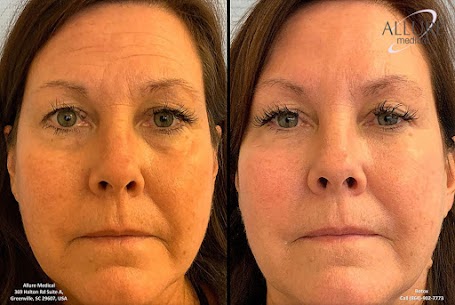
Depth matters. Crow’s feet are typically intramuscular but superficial enough to avoid zygomaticus spread. Glabella requires precise placement into the corrugators and procerus, often at a deeper plane close to periosteum, to control frown lines without dropping the medial brow. Forehead lines are in the frontalis, which is thin. Too deep, and the toxin drops. Too low, and you’ll get brow heaviness. Good injectors feather and respect the no fly zone near the orbital rim.
Dilution and volume shape diffusion. More dilute solution spreads more. Some providers prefer higher concentration to limit drift in areas like the glabella, but might favor slightly more dilute for a smooth forehead blend. Neither approach is universally right, but inconsistency across areas can explain odd outcomes.
Mapping your habitual expressions matters more than static anatomy. A person with a strong lateral frontalis band will show little etched lines near the temples even if the central forehead looks smooth. If that lateral band is ignored, the brow can arch too much, the “Spock brow” look.
For masseter botox, injection points need to avoid the parotid duct and be confined to the masseter belly. Injecting too high risks diffusion to the zygomaticus muscles, creating a lopsided smile. Proper depth and spacing minimize that.
The med spa question
A med spa can be excellent or risky. The differentiator is oversight and culture. If a botox med spa is led by a physician with relevant board certification who is present and accountable, if injectors have robust training and ongoing education, if there is a clear protocol for complications and follow-up, you can get safe, beautiful results. If the spa advertises heavy discounts, rotates injectors weekly, and promises unlimited areas for a flat fee, you’re likely to get a rushed map and inconsistent technique.
Ask who supervises, who injects you, whether that person is on site for follow-up, and how complications are handled. Ask whether they photograph and document dose and placement, and whether they tailor botox dosage over time based on your response.
Realistic expectations and maintenance
Botox results are not permanent. Most people schedule a botox appointment every 3 to 4 months for maintenance. Heavy lifters and expressive talkers sometimes need a shorter interval. If you are new to botox, start with the most bothersome area, live with it for a cycle, then layer other areas if you like the effect. This is especially true for forehead lines. Treating the glabella first often improves the forehead because the frown habit drives a lot of upper face tension.
Static lines etched into skin for years may soften with repeated sessions and topical support but may not vanish. Here, pairing botox with resurfacing or microneedling adds benefit. If you want to smooth neck bands, botox can help the platysma, but skin laxity still needs skin treatments or a surgical plan. A lip flip enhances shape slightly but does not add bulk. Filler still has a role.
Alcohol, exercise, and supplements can influence bruising. If you bruise easily, pause fish oil, high dose vitamin E, and ginkgo for one week if your medical conditions allow it. Avoid intense exercise for 24 hours after a botox session. Keep your head upright for several hours and skip saunas that day. These aftercare steps are small but help.
When a dermatologist makes the most sense
If your priority is facial aesthetics, especially complex areas like the brow-lid relationship or nuanced forehead movement, a dermatologist who injects daily brings an eye for subtlety and a framework for skin health beyond the syringe. They can integrate botox with medical skin care to improve texture and tone, and they tend to be vigilant about long term balance. If you have rosacea, acne, melasma, or scarring, the dermatologist can time or combine treatments safely.
They are also a strong choice for botox excessive sweating in the underarms or forehead, where skin health and sweat gland mapping intersect with cosmetic outcomes. And they usually run clinics designed for follow-up, which matters during your first few sessions.

When another botox specialist may be better
For migraine protocols, a neurologist with botox experience is ideal. For spasticity, a physiatrist or neurologist who uses ultrasound guidance can place toxin into deep muscles precisely. For TMJ treatment or jaw slimming where bite and occlusion issues dominate, a dentist or orofacial pain specialist who understands function and parafunction can design a plan that pairs botox with dental appliances and behavioral strategies.
For eyelid asymmetries or previous eyelid surgery, an oculoplastic surgeon brings specialized knowledge of eyelid elevators and depressors. For patients considering surgical brow or neck procedures, a facial plastic surgeon can time non surgical botox within a broader plan.
Red flags worth noting
I encourage patients to pause when they encounter: per area pricing so low it implies under-dosing, no medical history taken before the botox procedure, injectors who cannot name the muscles they are treating, one pattern used for every face, no photographic documentation, or no plan for touch ups and follow-up. A clinic that pushes more units or more areas without listening to your goals is not acting in your interest.
Conversely, green flags include a thoughtful consultation, clear education about botox safety and side effects, transparent botox pricing, and a consistent injector who learns your face over time.
A simple way to decide whom to trust
- If your goal is nuanced facial rejuvenation with natural movement, favor a board-certified dermatologist or facial plastic surgeon who injects daily and can show consistent, unretouched botox before and after photos that match your age, gender, and skin type. If your goal is medical relief such as migraine prevention or spasticity control, choose a neurologist or physiatrist experienced with the relevant protocol, and verify they treat a high volume of similar cases. If your goal is jaw slimming or TMJ pain relief rooted in clenching, consider a dentist with orofacial pain training or a dermatologist who collaborates with one, and confirm they discuss bite mechanics and nightguard use. If you prefer a med spa, confirm physician oversight, injector credentials, complication protocols, and that the same clinician will see you for follow-up. For any provider, ask how they tailor botox dosage, how they handle asymmetry, and what happens if you are not satisfied at two weeks.
What a good year of botox looks like
In a well planned year, you’ll have three or four botox sessions, each taking 15 to 30 minutes. Your first botox consultation sets the baseline with photos and a measured plan. At two weeks, you check in for minor tweaks. Over time, doses may drop in areas where muscle habits soften. You’ll learn your pattern: perhaps your crow’s feet fade at three months but your glabella holds to four and a half. You’ll pair botox with skincare and, if needed, light resurfacing to smooth residual etching. If you’re using botox medical treatment for migraines, you’ll track monthly head pain days and see a Neurology team every 12 weeks.
This rhythm lowers anxiety because you know what to expect, how long botox lasts for you, and when to book your next botox appointment. The process becomes maintenance, not a reinvention each visit.
Final thoughts from the chair
After thousands of injections, here is what stands out. Faces have memory. Muscles learn your intent. When botox treatment is precise and respectful, you still look like you, just less tired and less tense. When it is rushed or overdone, you lose the micro-movements that make expressions believable. An injector who listens can prevent that. An injector who knows when not to treat an area can be even more valuable than one who says yes to everything.
Dermatologist or other botox specialist, the right partner has three things: mastery of anatomy, good judgment, and a system for follow-up. The brand is the same. The hands and the eyes are not. Choose the hands and eyes that see you clearly, and your results will follow.